China’s role in shaping the new global order
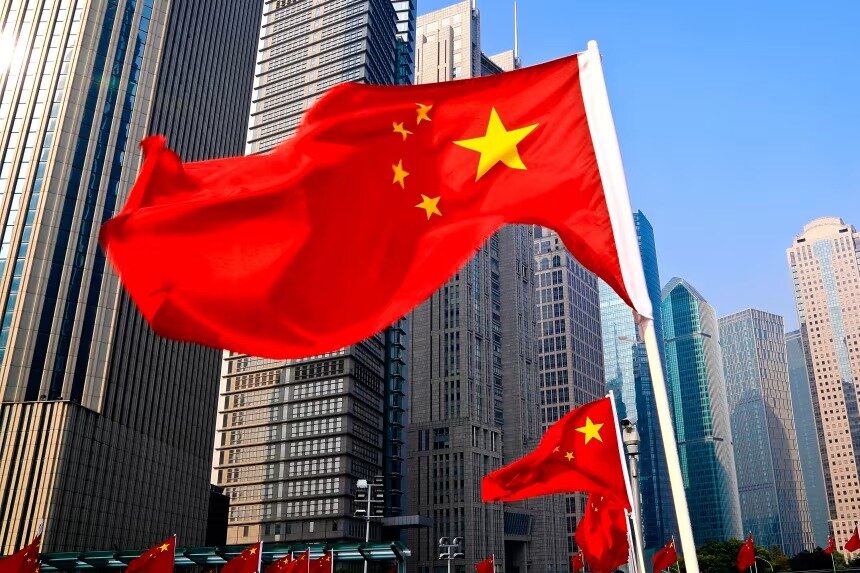
Over the past two decades, China has emerged as one of the principal actors in shaping a new international order—an order no longer solely dominated by Western powers, particularly the United States, but increasingly defined by the multiploidization of global power and a new balance between East and West. By combining economic, technological, cultural, and political capabilities, China has elevated its position from a regional power to a global one, playing a decisive role in redefining the rules of international engagement.
The first—and perhaps most significant—arena of China’s influence is the global economy. China is currently the world’s second-largest economy and the largest trading nation. The Belt and Road Initiative (BRI), serving as the backbone of China’s global strategy, has established a vast network of economic, rail, maritime, and digital corridors connecting Asia, Europe, Africa, and Latin America. This initiative not only strengthens economic infrastructure in participating countries but also expands China’s geoeconomic influence worldwide. From this perspective, China is gradually reshaping globalization by advancing a new model whose center of gravity lies in East Asia.
In the sphere of technology and innovation, China has also experienced a remarkable transformation. From artificial intelligence and fifth-generation (5G) communications to clean energy industries and electric vehicles, China is no longer merely a consumer of Western technology but a producer of cutting-edge innovations. Chinese companies such as Huawei, Alibaba, ByteDance, and Tesla China have secured significant shares of the global market, reinforcing the country’s technological autonomy. This trajectory has reduced Western dominance over the global science and technology order, steering it toward greater competition and a diversification of centers of power.
Politically and in the realm of international diplomacy, China seeks to promote a model of relations based on “non-interference,” “mutual respect,” and “shared benefit.” Unlike certain Western approaches that may involve political intervention or military pressure, China aims to consolidate its influence through dialogue, investment, and mediation. A prominent example was China’s mediating role in the restoration of diplomatic relations between Iran and Saudi Arabia in 2023, demonstrating that Beijing can also contribute to strengthening regional stability and peace.
In the military and security domain, China is modernizing its armed forces within a framework of defensive deterrence. Although Chinese military doctrine places less emphasis on expanding direct military influence, the development of its naval fleet, missile capabilities, and space technologies has positioned China as a decisive actor in the security dynamics of the Pacific region. This shift has significantly altered the balance of power regionally and, consequently, globally.
Overall, China today is not merely pursuing a display of power; rather, it seeks to replace the previous unipolar order with a multipolar, balanced system grounded in mutual respect.
Although this approach faces challenges—including intense competition with the United States, tensions surrounding Taiwan, and economic pressures—it outlines a new path for shaping the future of the world: a world in which East and West, instead of remaining in constant confrontation, move toward constructive coexistence within a framework of shared interests.
Leave a Comment